Welkom op Israël - Palestina Info
Zoek


Israël-Palestina info
Onze hoofdartikelen
in html over
Israël - Palestina en het
Midden-Oosten Conflict
***************
Our English main page on
Israel - Palestine and the
Middle East Conflict

Lijst van artikelen
in php-deel /
List of all articles


Artikelenlijst /
List of Articles

* Palestijnen politiek
* 60 Jaar na delingsplan:
Israël en de VN

* 60 Jaar Israël &
Nakba (1948-2008)

*
Zesdaagse Oorlog
*
Bezette gebieden
& nederzettingen
* Gaza Strook
* Hamas
*
Apartheidsmuur
of veiligheidshek
* Jeruzalem
* Vluchtelingen
* Demografie
* Racisme, kolonialisme
& Apartheid

* Mythes & beeldvorming
over het conflict

* Verenigde Naties
* Zionisme
* Anti-zionisme
* Israël boycot
* Zionistische lobby
* Initiatieven voor
vrede en verzoening

* Palestijnse
Gevangenendocument

* Hezbollah
* United Civilians for Peace
* Reisverslag Israël
* Sitemap
______________
ENGLISH:

* Short History of the
Arab-Israeli conflict

* Why a boycott of Israel
does not help peace

Links
Onze Weblinks /
Our Links page


Links "Israel Informatie Eigenstart"

Zie ook de links onderaan deze pagina. /
See also the links at the bottom of this page.

Menu
· Startpagina
· Artikelen chronologisch
· Artikelen per rubriek
· Artikelen Top 30
· Eerdere enquetes
· Jouw account (leden)
· Ledenlijst (leden)
· Statistieken (leden)
· Stuur Nieuws

Login
Loginnaam

Wachtwoord

Security Code: Security Code
Type Security Code

Nog geen lid? U kunt een account aanvragen. Als geregistreerde gebruiker krijgt u voordelen zoals de Thema-manager, opmerkingsconfiguratie en kunt u opmerkingen plaatsen onder uw eigen naam.

 
Website sedert oktober 2005

Dit deel van de website is bedoeld als actuele en interactieve sectie, en wordt gevuld met nieuws, achtergronden, commentaren & discussie.
Wegens tijdgebrek is ons forum is voorlopig nog niet aktief!
Om commentaren onder artikelen te zetten, moet U zich registreren als gebruiker. (Dit is helaas nodig vanwege de vele spam.)
Reacties zijn ook welkom via e-mail.

Via onze hoofdpagina Israël-Palestina Informatie komt U bij onze algemene artikelen over het Midden-Oosten conflict.

De artikelen en commentaren tot nu toe zijn onderverdeeld in de volgende rubrieken
(de meeste in het Engels en sommige in het Nederlands):

Background Articles & Opinions
* News & Comments about Israel & Palestine
* Lebanon & Israel

* News & Comments about the Middle East
* Nederlandstalige artikelen
* Anti-Semitism
* Joodse geschiedenis
* Internal Jewish & Israeli Issues
* News in English about the Netherlands
* Satire & Humor

*
Lijst van artikelen per rubriek
* Lijst van alle artikelen

De geplaatste artikelen geven niet noodzakelijk het standpunt van Israël-Palestina Info weer.
-----------------------------------
Actueel nieuws:
Op deze website is geen dagelijks nieuws te verwachten, hoewel we ernaar streven belangrijke ontwikkelingen te melden en vooral commentaren en analyses daarvan, soms van onszelf, maar meestal van anderen. Voor actuele nieuwsberichten verwijzen we naar een aantal bronnen:
* Nederlandstalig: naast de website NU.NL met actuele nieuwsberichten zijn er natuurlijk de vele online-edities van dagbladen en andere media.
* Engelstalig: bij onze weblinks staan onder "media" de 3 voornaamste Israëlische kranten, alsmede CNN en Aljazeera; daarnaast zijn er 2 Yahoo!-groepen van MidEastWeb die dagelijks nieuwsberichten over het Midden-Oosten rondsturen uit allerlei media: MEW-news en MEW-bkd (background - voor uitvoeriger achtergrondartikelen). Men kan zich op beiden abonneren of ze online bekijken bij Yahoo!
-----------------------------------
Hieronder staan de laatste 10 geplaatste items.

Nederlandstalige artikelen Anton van Hooff over Israël: een historicus onwaardig (IMO)
Geplaatst door abby op Thursday 03 July @ 03:54:55 GMT+1 (15 maal gelezen)

Anton van Hooff over Israel: een historicus onwaardig

IMO Blog, 03.07.2008

De Gelderlander trakteerde zijn lezers vorige week dinsdag op een onvervalst stukje pro-Palestina propaganda, geschreven door hun vaste columnist Anton van Hooff.

Zoals iedereen tegenwoordig zijn mening ventileert over de islam, integratie, orgaandonatie, embryoselectie, het strafrecht, Glenn Mills en natuurlijk voetbal, zo heeft ook iedereen een mening over het Midden-Oosten conflict. Niet gehinderd door feitenkennis ventileren mensen als Lange Frans, Justus van Oel, maar ook serieuze wetenschappers als Thomas von der Dunk, (wijlen) J.A.A. van Doorn en Anton van Hooff, en natuurlijk (oud)politici als Dries van Agt, Marcel van Dam, Harry van Bommel en Farah Karimi hun ongezouten mening over (vermeende) Israëlische wandaden en schendingen van de mensenrechten, waar de machteloze Palestijnen wel op moeten reageren door raketten af te vuren of zich in Israëlische supermarkten en bussen op te blazen. Dit is veelal gebaseerd op wat men toevallig in de media langs zag komen de afgelopen weken of maanden, dat zonder enige context aan elkaar wordt gerijgd om zo een beeld te creëren van Israël als meest walgelijke schurkenstaat. Dat van ieder land op deze manier een dergelijke karikatuur kan worden gemaakt, toonde Manfred Gerstenfeld vorig jaar al aan met zijn 'Bad News from the Netherlands' blog, waarin hij dagelijks negatief nieuws over Nederland bij elkaar zet. Bloggers uit andere landen, zoals Finland en Frankrijk, hebben zijn voorbeeld gevolgd.


Anton van Hooff maakt het in De Gelderlander van 24 juni behoorlijk bont, en geeft toe zich daarbij te baseren op wat toevallig in de media langskwam: "De stroom van beklemmende berichten droogt maar niet op", aldus Van Hooff. Vervolgens somt hij het nieuws over Israël van de voorgaande week op: het feit dat er slechts vier Israëli's zijn omgekomen door raketbeschietingen vanuit Gaza het afgelopen jaar, maar Israël wel 400 Palestijnen heeft gedood - moedwillig uiteraard, volgens het principe van 'oog om oog', maar dan erger, een 'honderdvoudige weerwraak'. Israël bouwt ook nog steeds huizen in Oost-Jeruzalem - foei!, Palestijnen hebben nu eindelijk een aanval van kolonisten kunnen vastleggen op camera, en de Israëlische luchtmacht oefent voor een aanval op de Iraanse nucleaire installaties. Misschien is een Iraans atoomwapen wel goed voor het evenwicht in het Midden-Oosten, verzucht deze classicus.

Met zijn verwijzing naar het Bijbelse oog om oog dat Israël in honderdvoud zou overtreffen, solliciteert Van Hooff bijna naar de kwalificatie 'antisemiet', een titel die hij als geuzentitel voert nadat Leon de Winter hem ooit van antisemitisme had beschuldigd in een column. Een beetje criticus van Israël moet tegenwoordig toch wel van antisemitisme zijn beschuldigd, anders hoor je niet bij de club. Aangezien geen land zo veelvuldig wordt bekritiseerd als Israël, begint het geweeklaag dat men door deze beschuldiging de mond word gesnoerd, nogal te vervelen.
Ook de verwijzing naar de zogenaamd zo machtige Israël lobby is een erg doorzichtige propagandatruc van antizionisten om zichzelf als underdog neer te zetten, die met gevaar voor eigen leven toch maar mooi voor de goede zaak durven te strijden. De helden.

De historicus Van Hooff is het ontgaan dat sinds Israël zich in 2005 uit de Gazastrook heeft teruggetrokken, er duizenden raketten vanuit Gaza op Israël zijn afgevuurd. Alle militaire acties die Israël sindsdien heeft uitgevoerd waren gericht op het stoppen van de raketbeschietingen vanuit de Gazastrook. Dat valt onder het recht en zelfs de plicht van een land om de eigen burgerbevolking te beschermen tegen vijandige aanvallen. De beschietingen met Qassam raketten en mortiergranaten hadden (helaas) de steun van niet alleen de Hamas regering maar ook de meerderheid van de bevolking in Gaza, en als de terreuraanvallen op Israël stoppen is het ook gedaan met de Israëlische tegenacties. Dat bij deze acties zoveel burgers zijn omgekomen, komt omdat Hamas en Islamitische Jihad bewust vanuit burgergebieden opereren en raketten afschieten vanuit schoolpleinen en woonwijken. Overigens zijn door interne gevechten en zogenaamde 'bedrijfsongevallen' ook honderden Palestijnen omgekomen het afgelopen jaar, maar die zijn natuurlijk een stuk minder interessant. Hamas en Islamitische Jihad schuiven de schuld van explosies bij het voorbereiden van aanslagen graag af op Israël, en helaas nemen de media die aantijgingen soms over zonder ze te checken of Israëls versie van het gebeurde ook weer te geven.

Het aller-bontst maakt Van Hooff het wanneer hij spreekt over een conferentie van Justice for Jews from Arab Countries. Dat het conflict ook Joodse slachtoffers kent, wil er bij hem duidelijk niet in:

"In hun machteloze woede over de kolonie Israël hebben sommige Arabische staten wraak genomen op hun joodse inwoners, die opeens burgers van een andere staat bleken te zijn. Want het merendeel van de landverhuizers is grif ingegaan op de uitnodiging om 'terug te keren' naar hun staat. En nu eist men op hoge toon vergoeding voor het geleden onrecht!"

Uiteraard kunnen burgers niet tegen hun wil opeens burgers van een andere staat worden, en is de 'wraak' genomen voordat zij naar Israël waren geëmigreerd. Israël was geen kolonie maar een VN lidstaat en gecreëerd nadat de VN voorstelde Palestina te delen. Eerder al had de VN Groot-Brittannië het mandaat over Palestina verleend onder voorwaarde dat hier een Joods thuis zou worden gecreëerd. De Joden hebben een millennia lange binding met het land, en er hebben altijd Joden gewoond. Zo had Jeruzalem eind 19ste eeuw al een Joodse meerderheid. En de 'wraak' tegen Israël ging vooraf aan de stichting van de staat, want al decennia voor de stichting waren er pogroms in Arabische staten en in Palestina, en werden anti-Joodse maatregelen getroffen. Joden waren, net als christenen, tweederangs burgers in de Arabische staten en moesten speciale belasting betalen om 'bescherming' te genieten. Daarnaast waren er allerlei vernederende 'tradities' die per tijd en plaats verschilden. Toch wilden de meeste Joden niet weg en waren zij gehecht aan hun woonplaats en land. Het feit dat sommigen van hen sympathie hadden voor de nieuwe Joodse staat is natuurlijk geen excuus om hen van hun land en bezittingen te beroven, te martelen en hun synagoges op te blazen, zoals Van Hooff blijkbaar denkt.

Zoals veel antizionisten maakt Van Hooff een kunstmatig onderscheid tussen Joden en Israël. Joden zijn goed, zolang ze maar niks met Israël te maken hebben en dit land op geen enkele manier steunen. Volgens hem is 'de identificatie van joden en Israël letterlijk levensgevaarlijk', en is Israël zelf de belangrijkste aanstichter van antisemitisme. Immers, als je Israël wil treffen, val je Joodse doelen aan, want die achterlijke Joden identificeren zich met dat rotland in plaats van het te zien voor wat het is: een van de ergste schurkenstaten ter wereld. Joden hebben het toch altijd goed gehad in andere landen, die paar jaar in door Duitsland bezette landen tijdens de oorlog uitgezonderd? Ze hebben toch niks te klagen? Joden zijn ook zo veeleisend. Ze kunnen prima buiten een eigen staat, en hebben zeker niet het recht die ergens te stichten waar ook anderen wonen. Vanwege het onrecht hun aangedaan rust volgens Van Hooff bovendien op hen de zware taak nooit een ander onrecht aan te doen (welk volk is zo perfect?). Van Hooff, zo begaan met hen die worden onderdrukt, heeft zeker het recht een van de meest vervolgde volken ter wereld de maat te nemen en voor alle onrecht dat hun na 1948 is aangedaan verantwoordelijk te houden. En zie, er zijn ook Goede Joden, zij die een Ander Geluid laten horen, en tegen hen heeft van Hooff helemaal niets. Zij hebben de lessen van de geschiedenis geleerd, en weten dat je je als Jood beter gedeisd kunt houden en niet moet streven naar datgene wat zoveel volken bezitten: een eigen staat. Verschil moet er wezen, en het is goed dat van Hooff de omhooggevallen Joden daar weer eens op heeft gewezen.

Ratna Pelle


(Meer lezen... | Score: 0)

Background Articles & Opinions Durban II and Islamophobia: Sounds of Silence (Mark Dubowitz)
Geplaatst door abby op Friday 27 June @ 04:56:53 GMT+1 (26 maal gelezen)

Sounds of Silence
By MARK DUBOWITZ
June 19, 2008
The Wall Street Journal Europe
Welcome to a world where criticism of militant Islam could land you in court or worse. In Vancouver, Canada's venerable Maclean's magazine awaits a hate-speech verdict from a human-rights tribunal for publishing a chapter from syndicated columnist Mark Steyn's best-selling book "America Alone." The accusers charge the author and publisher with "Islamophobia."
Last week, Ekmeleddin Ihsanoglu, secretary general of the 57-member Organization of the Islamic Conference (OIC), warned a gathering in Kuala Lumpur that "mere condemnation or distancing from the acts of the perpetrators of Islamophobia" would not suffice. He recommended that Western countries restrict freedom of expression and demanded that the media stop publishing "hate material" like the Danish cartoons. "It is now high time for concrete actions to stem the rot before it aggravates any further," he said.
Islamic countries already scored a victory on this front back in March. They pushed through a resolution at the U.N. Human Rights Council urging a global ban on the public defamation of religion -- read Islam.
These are examples of a growing campaign to use judicial power to silence critics of militant Islam. In the U.N. Durban Review Conference, scheduled for April 20-24, 2009 in Geneva, it appears that the OIC and its cohorts have identified the perfect platform to further their agenda.
Recall the first Durban meeting, the 2001 U.N. World Conference Against Racism, which took place only days before 9/11. That gathering deteriorated into a hate-fest against Jews, America and Israel. Disgusted by the vile rhetoric and Stürmer-like caricatures of Jews on display, the U.S. and Israeli delegations walked out.
Hopes that the Durban II conference next year will be a more enlightened event have already been dashed by the fact that some of the worst human rights abusers are setting its agenda. At the urging of the OIC, Libya secured chairmanship of the preparatory committee. Iran and Pakistan each won a seat on the committee. And Egypt, another OIC member, has been representing the 53-nation African Group during floor debates.
And so instead of Durban II rectifying the sins of the past, this latest U.N. forum will seek to undermine free societies by invoking the specter of Islamophobia. The OIC is the U.N.'s most powerful voting bloc. As the democracies at the U.N. have repeatedly learned, the OIC, with 57 members the controlling group in the 130-member bloc of developing countries, can usually push through its agenda with little difficulty.
The likely outcome of Durban II will be to urge all U.N. member states to pass legislation restricting basic freedoms of speech and action -- all in the interest of preventing "Islamophobia." The discrimination or defamation of Muslims, or of any other group for that matter, is of course reprehensible. But "Islamophobia," as defined by Libya, Iran and the other Durban II organizers, covers any criticism of Islam, Muslims or their actions.
If the leaders of these countries have it their way, writing op-eds criticizing Islamic radicalism, or speaking out against Muslim terrorists or, of course, publishing cartoons of the prophet Muhammad, are soon to be considered criminal examples of racism.
During the most recent Durban II preparatory meetings in April and May, OIC members from Iran to Indonesia all insisted that freedom of expression is what causes Islamophobia. "The most disturbing phenomenon is the intellectual and ideological validation of Islamophobia," noted the Pakistani representative to the U.N., Marghoob Saleem Butt, on behalf of the OIC. "While it is expressed in the form of defamation of religion, it takes cover behind the freedom of expression and opinion." Voicing the demands of the Muslim bloc and its many authoritarian leaders, Mr. Butt requested that the Durban process "devise normative standards that provide adequate guarantees" against the intolerance of Muslims promoted by these freedoms.
Human rights advocates worried about this threat to civil liberties have been voicing their concerns with little success. Juliette De Rivero, for example, the Human Rights Watch advocacy director in Geneva, raised the alarm in late April: "Justified concerns about the complex relationship of racial and religious intolerance and hatred should not be the pretext to undermine key freedoms, including freedom of speech," she told the conference organizers in Geneva.
The danger of the Durban process is that it seeks to shape international and national laws. If the OIC succeeds, a broad definition of "Islamophobia" will be incorporated into Durban II's final outcome document. Thereafter, expect U.N. bodies, such as the Committee on the Elimination of Racial Discrimination, to call countries to task if they fail to implement these recommendations. Other organs of the international system will adopt and cite the Islamophobia definition as well, until it and its ill effects have migrated throughout the international system.
The Durban II recommendations, however, will not stop only at warping international standards on what constitutes Islamophobia -- the OIC aims to export its language into individual countries' domestic laws. The first point in a draft of the conference's final outcome document compels countries to pursue the "enactment of adequate legislation in line with [those] international standards." The same diplomatic draft paper identifies freedom of expression as a "main challenge and obstacle" to addressing contemporary forms of racism.
Only the European Union can now stop this insidious process. Canada has already announced that it will boycott the conference, and the U.S. has also indicated that it will not participate in Durban II unless satisfied that it will not be another fiasco. But only the threat of a European pullout would deal a true blow to the credibility of the proceedings and deny the partisans of "Islamophobia" the U.N. imprimatur they crave.
Next month, France ascends to the EU presidency. It will be up to Paris to lead the fight for Western freedoms and, for once, put Iran, Libya, and other authoritarian states on the defensive. Let's hope French President Nicolas Sarkozy understands what's at stake.

 
Mr. Dubowitz is executive director of the Foundation for Defense of Democracies.


(Meer lezen... | Score: 0)

Background Articles & Opinions Google Earth New Platform for Anti-Israel Propaganda (Andre Oboler)
Geplaatst door abby op Friday 27 June @ 04:34:04 GMT+1 (23 maal gelezen)

Jerusalem Issue Brief

Jerusalem Center for Public Affairs
Institute for Contemporary Affairs founded jointly with the Wechsler Family Foundation

Vol. 8, No. 5     26 June 2008


Google Earth: A New Platform for Anti-Israel Propaganda and Replacement Geography

Andre Oboler


Virtual Israel, as represented by Google Earth, is littered with orange dots, many of which claim to represent "Palestinian localities evacuated and destroyed after the 1948 Arab-Israeli war." Thus, Israel is depicted as a state born out of colonial conquest rather than the return of a people from exile. Each dot links to the "Palestine Remembered" site, where further information advancing this narrative can be obtained.

Many of the claims staked out in Google Earth present misinformation, and sites known to be ruins in 1946 are claimed to be villages destroyed in 1948. Arab villages which still exist today are listed as sites of destruction. The Google Earth initiative is not only creating a virtual Palestine, it is creating a falsification of history.

The concept of "replacement geography" replaces the historical connection of one people to the land with a connection between another people and the land. The inclusion of virtual Palestine, superimposed on Israel in the core layer of Google Earth, is an example of replacement geography advanced by technology.

Those wishing to explore Israel in Google Earth are immediately taken to a politically motivated narrative unrelated to their quest. Google should remove the narrative and treat Israel as it treats every other country on the globe. The core layer of Google Earth should be ideology free and not serve as a platform for indoctrination or a campaign to wipe Israel off the virtual map.

The influence of the Internet on our lives is increasing. News, advertising, employment, education, and networking are being affected. Israel's security is especially vulnerable to the manipulation of geography. The online world allows the creation of a virtual reality that at times bears only passing resemblance to facts on the ground. The gap between reality and virtual reality is further exploited by political activists promoting what we term "replacement geography," a means of controlling the virtual representation of land in place of controlling the land itself. In an information age, control on the common map may be worth more in negotiations than control on the ground.


Google Earth

With a user base of 400 million,1 Google Earth uses satellite imagery combined with maps, terrain, and 3D buildings to present the earth at various levels of magnification. Key features (geography, place details, pictures, etc.) are included with the download of Google Earth in what is known as a "core layer." Users can also download "custom layers" created by other users, which provide educational, historical, or special interest information to be accessed by those wishing to take the Google Earth experience further.

The Google Earth website was the 8th most searched for website in the UK at the start of 2006.2 The user base in June 2007 was 200 million,3 up 100 percent from reports10 months earlier.4 The application has broad appeal, with almost a quarter of the visitors to Google Earth over the age of 55.5 Google Earth has been used by campaign groups to raise public awareness; examples include grass roots environmental campaigns that created a layer with information against deforestation; a WWF (World Wide Fund for Nature) layer showing large-scale environmental and socioeconomic shifts; and the United States Holocaust Memorial Museum which created a layer with information on the crisis in Darfur. These projects were custom layers which users could add to Google Earth.6


Virtual Reality

Virtual Israel, as represented by Google Earth, is littered with dozens of orange dots. Orange dots represent contributions from the user community, and those appearing by default have been accepted into the core layout by Google Earth. In the case of Israel, most of these dots claim to represent "one of the Palestinian localities evacuated and destroyed after the 1948 Arab-Israeli war." For example, Ramat Aviv, the site of Tel Aviv University, appears as Al Shaykh Muwannis. While generally Google Earth does not erase Israeli towns and kibbutzim, it has heavily integrated a politically motivated Palestinian narrative into the map of Israel. As a result, Israel is depicted as a state born out of colonial conquest rather than the return of a people from exile. Each orange dot links to the "Palestine Remembered" site, where custom layers which further advance this narrative can be obtained.

Early press reports portrayed the virtual Palestine initiative as documentation of fact and included Israeli comments that it was "biased but legitimate."7 Later research showed that many of the claims staked out in Google Earth were presenting misinformation. Kiryat Yam was wrongly claimed to be built on the Palestinian village of Ghawarina. Many sites known to be ruins in 1946 are claimed to be villages destroyed in 1948. Arab villages which still exist today are listed as sites of destruction.8  The Google Earth initiative is not only creating a virtual Palestine, it is creating a falsification of history.

Google Earth's core information also includes other problems. Previously, areas beyond the "green line" were labeled as "Occupied Territories," a phraseology which is sometimes used to justify terrorism, rather than "disputed territories."9 The area listed as "occupied" also included the Temple Mount in Jerusalem.10 Google Earth places Mt. Scopus and its Hebrew University campus in Jerusalem within Jordanian territory prior to 1967, even though it was an area where Israel exercised control during that period, according to the 1949 Armistice Agreement.

In March 2008 the Gaza Strip was still listed as "Israeli-occupied," despite Israel's full withdrawal in 2005 and the military takeover of the Strip by Hamas in mid-2007. By May 2008 (after press coverage), the label was changed to read "Gaza Strip." A note states: "Many sources still regard the Gaza Strip as 'Israeli-occupied' despite formal Israeli withdrawal in September 2005."11 There is still no mention of Hamas' control.


Politically-Loaded Geography

"Replacement geography" builds on the concept of "replacement theology," a position that spurred anti-Semitism within the church and which, starting with Vatican II, has been removed from Christian doctrine. Indeed, it has been stated that recognition of the State of Israel by the Vatican completed this process.12 Replacement theology stated that Christians had inherited the covenant and replaced the Jews as the chosen people. The concept of replacement geography similarly replaces the historical connection of one people to the land with a connection between another people and the land.

This was famously applied by the Romans when they renamed Judea to Palaestinia, and Jerusalem to Aelia Capitolina in 135 CE in an effort to destroy the Jewish people after the Bar Kokhba revolt. In more recent times, replacement geography has resulted in the destruction of Jewish artifacts at the Temple Mount.13

The inclusion of virtual Palestine, superimposed on Israel in the core layer of Google Earth, is an example of replacement geography advanced by technology. Those wishing to find directions, explore the cities of Israel, or randomly wander across this small piece of land are immediately taken to a politically motivated narrative unrelated to their quest. This is the sort of replacement the ancient Romans tried and failed to achieve. The promotion of a replacement narrative works against a compromise solution to the Israeli-Palestinian conflict, inspiring absolutist positions rather than a negotiated settlement.


Main Implications

Generally, Google allows all kinds of organizations or individuals to create overlays with their own information on its map. These overlays are only available to those who specifically request them, but they are not automatically incorporated into the core map of Google Earth that every user entering its website can see. Disturbingly, Google has incorporated the Palestinians' overlays and their accompanying narrative into its core maps of Israel. As Google maintains editorial control over its core layer, it has responsibility for its content, which it clearly has not adequately exercised.

Google Earth presents a tremendous challenge by allowing historical revisionism. Maps of the world have changed with evolving historical circumstances everywhere. Yet theoretically, with this tool, organizations seeking to make a claim for Mexican sovereignty over territories incorporated into the U.S. in the nineteenth century could raise such arguments by revising the map of Texas or California. Rather than serving as an educational resource, Google Earth could simply evolve into a website for political warfare.

For those who do not physically visit Israel, the "facts" on this virtual ground are real. It is to be expected that people will form their opinion on issues such as borders, land rights, and historic connection based on sources like Google Earth. The social propagation of a narrative of Israeli aggression and ethnic cleansing - an aspect of "Anti-Semitism 2.0"14 - is spread through Google Earth.

Without a response that includes new information about the historical connection of the Jewish people to Israel throughout the ages, as well as modern Israeli history and the Israel of today, the world's opinion of Israel can only grow dimmer. An increase in content - assuming Google will eventually add it to the core layer, something that is far from certain - would address the vast imbalance, yet do little for the user experience.

A far better solution would be for Google to remove the narrative and treat Israel as it treats every other country on the globe. Both the Palestinian narrative and promotion of Israel can have their place, but this should be in optional layers. The core layer of Google Earth should be ideology free and not serve as a platform for indoctrination or a campaign to wipe Israel off the virtual map.

*   *    *

Notes

1. Mike Swain, "Amazon Tribe Using Google Earth to Battle Illegal Loggers," Daily Mirror, 21 June 2008,
http://www.mirror.co.uk/news/topstories/2008/06/21/amazon-tribe-using-google-earth-to-battle-illegal-loggers-89520-20615602/
2. Quentin Reade, "Google Earth's Popularity Booms," Web User Magazine, 25 January 2006, http://www.webuser.co.uk/news/news.php?id=73488
3. Stefanie Olsen, "Do-Gooders Doing Google Earth," CNET News.com, 7 June 2007, http://www.news.com/2100-1038_3-6189464.html
4. David Meyer, "Google, Microsoft Vie for Earth Domination," CNET News.com, 12 September 2006,
http://news.cnet.com/Google,-Microsoft-vie-for-Earth-domination/2100-1032_3-6114828.html
5. Quentin Reade, "Google Earth's Popularity Booms," Web User Magazine, 25 January 2006, www.webuser.co.uk/news/news.php?id=73488.
6. Stefanie Olsen, op. cit.
7. Gal Mor, "Palestinian Villages Commemorated on Google Maps," Ynet News, 13 July 2006.
8. David Shamah, "Digital World: Google Earth's 'False Flags'," Jerusalem Post, 4 March 2008.
9. Dore Gold, "From 'Occupied Territories' to 'Disputed Territories'," Jerusalem Viewpoints, No. 470, Jerusalem Center for Public Affairs, 16 January 2002.
10. "Google's Latest Anti-Jewish Outrage," WorldNetDaily, 11 March 2008. 
http://worldnetdaily.com/index.php?fa=PAGE.view&pageId=58658
11. See in Google Earth, 22 June 2008.
12. Padraic O'Hare, The Enduring Covenant: The Education of Christians and the End of Antisemitism, (Pennsylvania: Trinity Press International, 1997).
13. Mark Ami-El, "The Destruction of the Temple Mount Antiquities," Jerusalem Viewpoints, No. 483, Jerusalem Center for Public Affairs, 1 August 2002,
http://www.jcpa.org/jl/vp483.htm
14. Andre Oboler, "Online Antisemitism 2.0. 'Social Antisemitism' on the 'Social Web'," Post-Holocaust and Anti-Semitism, No. 67, Jerusalem Center for Public Affairs, 1 April 2008.

*    *    *

Dr. Andre Oboler is a social media expert. He holds a Ph.D. in computer science from Lancaster University, UK, and is a Post-Doctoral Fellow in Political Science at Bar-Ilan University in Israel. He is currently a Legacy Heritage Fellow at NGO Monitor in Jerusalem, and edits ZionismOnTheWeb.org - a website countering on-line hate.


This Jerusalem Issue Brief is available online at:
http://www.jcpa.org


(Meer lezen... | Score: 0)

Background Articles & Opinions Hamas Interest in the Tahdiya - Temporary Truce - with Israel (JCPA)
Geplaatst door abby op Thursday 26 June @ 00:45:58 GMT+1 (28 maal gelezen)

Jerusalem Issue Brief
Jerusalem Center for Public Affairs
Institute for Contemporary Affairs founded jointly with the Wechsler Family Foundation
 
Vol. 8, No.4    19 June 2008
 
 
The Hamas Interest in the Tahdiya (Temporary Truce) with Israel

Jonathan Dahoah Halevi

Hamas regards the temporary cease-fire as a tahdiya and not a hudna. A tahdiya - "a period of calm" - is used by Hamas to describe a simple cease-fire. A hudna implies recognition of the other party's actual existence, without acknowledging its legitimacy.
In an interview with Al-Jazeera (April 26, 2008), Hamas leader Khaled Mashaal clarified that for Hamas, a tahdiya is "a tactic in conflict management." He added that it "is not unusual for the resistance...to escalate sometimes and to retreat a bit sometimes as the tide does....The tahdiya creates a formulation that will force Israel...to remove the siege...and if it happens it will be a remarkable achievement."
Official sources in Israel have explained that Hamas' interest in a lull in the fighting is a result of its "distress." But the organization did not experience "distress." Hamas has introduced and maintained law and order in Gaza, strengthened its overall control, suppressed opposition, and achieved broad popular support for its policies.
An important objective for Hamas is winning the Palestinian presidential election, which will be held when Mahmoud Abbas finishes his term of office in December. The lull will permit Hamas to prepare the field to take over from Abbas. Hamas is liable to claim that, according to Palestinian law, administrative authority should be passed on to the chairman of the parliament, who is a Hamas leader, or should be decided by the parliament itself, where Hamas has an overwhelming majority.
One diplomatic consequence of the tahdiya will be increasing pressure on Israel to accept a future reconciliation between Hamas and Fatah. That could lead to increasing demands on Israel to negotiate a permanent status arrangement with a joint Hamas-Fatah government, while Hamas remains committed to its political program of the elimination of Israel.
The cease-fire also grants Hamas a golden opportunity to expand its military build-up for the next round of terror and violence. Emulating Hizbullah's strategy, Hamas is striving to acquire longer-range and more destructive missiles to be used for deterrence and as a sword on Israel's neck.

After eight years of armed Intifada, countless Palestinian terrorist attacks, and more than 7,000 rockets fired against civilians in Israel, the Egyptian government succeeded in securing an agreement by Israel and Hamas for a cease-fire that took effect at 6:00 a.m. on June 19, 2008. Officially, the Israeli government argues that there is no understanding with Hamas, but only with Egypt. However, that formalism is not necessarily the perception of the international community.
 
The main terms of the unwritten agreement include the following:
·        All Gaza-Israel violence stops for six months. After three days, Israel will ease its blockade of Gaza, allowing more vital supplies in.
·        A week later, Israel will further ease restrictions at cargo crossings.
·        In the final stage, talks will be conducted about opening the Rafah crossing between Gaza and Egypt and for a prisoner exchange to free IDF soldier Gilad Shalit, held by Hamas for two years.(1)
 
Hamas regards the temporary cease-fire as a tahdiya and not a hudna. The difference between the two Arabic terms is substantial. Hudna means "truce," which is more concrete than tahdiya - "a period of calm" - which Hamas often uses to describe a simple cease-fire. In traditional Islamic thought, a hudna is negotiated between an Islamic entity and a non-Islamic entity, but it can be reversed the moment the Islamic side has gained sufficient strength to resume fighting. Nevertheless, a hudna implies recognition of the other party's actual existence, without acknowledging its legitimacy.
 
A tahdiya has less standing than a hudna. Khaled Mashaal, Hamas' leader, and his deputy in leadership, Musa Abu Marzouq, elaborated in recent months their interpretation of a tahdiya. In an interview with Al-Jazeera (April 26, 2008), Mashaal clarified that for Hamas, a tahdiya is "a tactic in conflict management and a phase in the framework of the resistance [meaning all forms of struggle]." He added that it "is not unusual for the resistance...to escalate sometimes and to retreat a bit sometimes as the tide does....The tahdiya creates a formulation that will force Israel...to remove the siege...and if it happens it will be a r emarkable achievement....We are speaking of a tactical tahdiya....As long as there is occupation, there is no other way but resistance."(2)
 
When asked about Mashaal's "tactical tahdiya," Musa Abu Marzouq explained that "the tahdiya is not a strategy or a goal itself, but it is a tactical step in this conflict.... Our goal is to liberate our land and to bring about the return of our people. The resistance is a tool to reach this end."(3)
 
Official sources in Israel have explained that Hamas' interest in a lull in the fighting is a result of the "distress" it has suffered from the extended blockade of Gaza.(4) Israel's policy did in fact cause difficulties for Hamas, but these hardships do not explain Hamas' strategic motives for the lull. The organization did not experience "distress" - neither in a strengthening of the opposition to the Hamas administration, nor in an increase of popular protests against it. In fact, the opposite is true. Even the official Israeli evaluation of Hamas' first year of rule since its military takeove r in June 2007 suggests that Hamas has managed to introduce and maintain law and order in the Gaza Strip, strengthen its overall control, suppress opposition, and achieve broad popular support for its policies.
 
 
Hamas' Motivation: Legitimacy and Recognition

Hamas' motives have nothing to do with "distress," but rather with "opportunities" - that is, the objectives it seeks to attain in the international arena and especially in its own internal political arena. First, the lull in the fighting is meaningless for Hamas; it is not a cease-fire or a truce, but a "temporary" cessation of hostilities with Israel. Next, Hamas is not committed to continuing the lull when the six months run out, and it can use any excuse it chooses to continue its terrorist campaign: Israeli building in the settlements, Israeli measures taken in Jerusalem, or IDF anti-terror measures in the West Bank. Hamas can also send other Palestinian organizations to do its dirty work.

The tahdiya agreement for a lull is an important achievement for Hamas. Hamas will gain the recognition it wants as the legitimate ruler of the Gaza Strip. Despite the fact that the Israeli government has defined Hamas-ruled Gaza as a hostile entity, Israel agreed to the continuation of trade with it, and even recognized the hostile entity's authority to operate the Rafah crossing. Hamas regards that as immensely important and wants to exploit it as a lever to open the door to official relations with Europe, and to have itself removed from the various lists of terrorist organizations.

Another important objective for Hamas is winning the Palestinian presidential election, which will be held when Mahmoud Abbas finishes his term of office in December. Hamas wants to present itself in the contest as a legitimate ruling body worthy of inheriting the presidency. High-ranking Hamas figures have already stated that the organization will not recognize Abbas' authority as president after December 2008.(5)
 
Hamas is liable to claim that, according to Palestinian law, administrative authority should be passed on to the chairman of the parliament, who is a Hamas leader, or should be decided by the parliament itself, where Hamas has an overwhelming majority. In other words, for Hamas, the lull in the fighting will permit the movement to prepare the field to take over from Abbas, thereby complementing its military takeover of Gaza. Hamas' challenge is also the motivation behind Abbas' desire to talk to Hamas about reaching an understanding about new elections, and it explains why Hamas has rejected the suggestion.
 
 
Main Implications of the Tahdiya
 
Hamas wants to exploit the lull in the fighting to upgrade its status in the international community in order to gain legitimacy for its campaign for the presidency after Abbas' term is over in December 2008.
 
The cease-fire grants Hamas a golden opportunity to expand its military build-up for the next round of terror and violence. Emulating Hizbullah's strategy, Hamas is striving to acquire longer-range and more destructive missiles to be used for deterrence and as a sword on Israel's neck.
 
Israel has acknowledged Hamas, albeit unwillingly, as the de facto ruling power in Gaza. Israel's acceptance of the cease-fire is a blow to the international war on terror and gives immunity to Hamas and other terrorist organizations in Gaza, including al-Qaeda affiliates.
 
Another diplomatic consequence of the tahdiya will be increasing pressure on Israel to accept a reconciliation agreement between Hamas and Fatah in the future. That could lead to increasing demands on Israel to negotiate a permanent status arrangement with the joint Hamas-Fatah government, while Hamas remains committed to its political program of the elimination of Israel. It is important to recall that the entire Israeli-Palestinian negotiating track since the convening of the Annapolis conference was premised on the exclusion of Hamas and the ultimate achievement of an agreement between the Israeli government and the government of Mahmoud Abbas in Ramallah alone.
 
Delaying the release of Cpl. Gilad Shalit to a later phase of the Israel-Hamas arrangement can have a demoralizing effect in Israel, for it sends a message that the recovery of captured soldiers is not the highest priority.
 
*     *     *
 
Notes
 
1. http://www.startribune.com/world/20167939.html?location_refer+World:highlightModules:3
2. http://aljazeera.net/NR/exeres/41C8CBD6-5D3A-4F4B-B952-CFBF766D6B6F.htm? wbc_purpose=basic_current_current_current_Current
3. http://www.alwatan.sy/dindex.php?idn=32872
4. http://news.walla.co.il/?w=/22/1291534
5. http://www.al-sharq.com/DisplayArticle.aspx?xf=2008,June,article_20080608_103 &id=worldtoday&sid=arabworld
 
*     *     *
 
Lt. Col. (res.) Jonathan D. Halevi is a senior researcher of the Middle East and radical Islam at the Jerusalem Center for Public Affairs. He is a founder of the Orient Research Group Ltd. and is a former advisor to the Policy Planning Division of the Ministry of Foreign Affairs. 
 
--------------------------------------------------------------------------------
 
This Jerusalem Issue Brief is available online at:
http://www.jcpa.org
 
Dore Gold, Publisher; Yaacov Amidror, ICA Chairman; Dan Diker, ICA Director; Mark Ami-El, Managing Editor. Jerusalem Center for Public Affairs (Registered Amuta), 13 Tel-Hai St., Jerusalem, Israel; Tel. 972-2-561-9281, Fax. 972-2-561-9112, Email: jcpa@netvision.net.il. In U.S.A.: Center for Jewish Community Studies, 5800 Pa rk Heights Ave., Baltimore, MD 21215; Tel. 410-664-5222; Fax 410-664-1228. Website: www.jcpa.org. © Copyright. The opinions expressed herein do not necessarily reflect those of the Board of Fellows of the Jerusalem Center for Public Affairs.
 
The Institute for Contemporary Affairs (ICA) is dedicated to providing a forum for Israeli policy discussion and debate.


(Meer lezen... | Score: 0)

Background Articles & Opinions The day Middle East Peace broke out (Ami Isseroff)
Geplaatst door abby op Wednesday 25 June @ 06:20:45 GMT+1 (26 maal gelezen)

De afgelopen week was er opeens nieuws van allerlei vredesinitiatieven, deals, en de bereidheid met vijanden te praten. Het staakt-het-vuren met Hamas, indirecte onderhandelingen tussen Israël en Syrië, een gevangenenuitruil met Hezbollah, en Israël stelde zelfs voor met Libanon vredesbesprekingen te voeren. De enige vredesonderhandelingen waarop geen vooruitgang wordt geboekt, zijn de vredesbesprekingen tussen Israël en de Palestijnse Autoriteit van Machmoud Abbas.
Vanwaar opeens al die initiatieven? Is het inzicht dat vrede beter is voor eenieder uiteindelijk doorgedrongen? Of zit er een meestercomplot van de Amerikanen of Zionisten achter? Wordt zo Iran effectief geisoleerd, door al haar bondgenoten met aantrekkelijke deals in het kamp van de 'good guys' te krijgen? Willen Bush en Olmert als grootse staatsmannen, en niet als mislukte politici, de geschiedenis ingaan? Of zit hier een sinister plan van de mullah's in Iran achter?

The day Middle East Peace broke out
06/18/2008


Last night I had the strangest dream, I never dreamed before;
I dreamed the world had all agreed, to put an end to war.

For all of us who are used to Middle East wars and war scares, bellicose statements and intractable conflicts, some of the recent headlines seem like a euphoric vision resulting from an exceptionally beneficent psychedelic drug. At least, they are very strange. Suddenly, it appears as though there is agreement and harmony on almost every front, between the most ferocious enemies. If it is all coming together, it is really wonderful, isn't it?


Consider some recent (last two days) headlines:


One half expects to find, in the back pages, a feature article that describes lions and lambs living in peace at the zoo, and a little notice about a bearded fellow entering Jerusalem on a white donkey.

When we add to all the improbable peace deals above the Doha compromise in Lebanon, the effect is truly striking - especially as it all is taking place in a relatively brief period. Even more interesting, the hand of the USA is all but invisible in every instance except the case of Shebaa farms negotiations in Lebanon. Until now, the United States was the mainstay of every peace deal between Israel and its neighbors. It was needed to cajole Israel into concessions and to provide money as an incentive for peace deals.

The various deals are even stranger because they don't seem to be very good for Israel or Arab moderates at all. The Doha "compromise" put the Hezbollah a giant step closer to controlling Lebanon. The missing Israeli soldiers Ehud Goldwasser and Eldad Regev are dead in all probability. Exchanging them or their bodies for convicted murderer Samir Kuntar would hand the Hezbollah another big free victory and invite further kidnappings and loss of life. That can't be a good deal. The truce in Gaza legitimizes the Hamas, opening the way for European recognition of the Hamas government, isolating the West Bank government of Mahmoud Abbas and Salem Fayyad, and giving the Hamas a decisive advantage in any future unity talks. The truce doesn't hold for the West Bank. The moderate Palestinians of the West Bank Palestinian Authority get nothing except new housing starts for Israelis in East Jerusalem and the promise of continued security raids. The Hamas reap the benefits of their obstinacy and violence. Captive soldier Gilad Shalit may or may not be released in return for an enormous number of Palestinian prisoners. The deal was brokered by Egypt's Hosni Mubarak. Why would Egypt, which has outlawed the Muslim Brotherhood Group at home, want to firmly establish the extremist Hamas next door?

Syria has proclaimed time and again that it will not give up its ties with Iran, and pointedly signed new agreements with the Iranian regime. Syria will not allow the IAEA to inspect suspect nuclear sites, leaving a compliant IAEA to report accurately, if misleadingly, that it could "find no evidence" of nuclear projects in Syria. If they could not examine the evidence, then of course they could not find any - the same situation as obtains in Iran. Syria also announced gleefully that they claim not only the Golan heights, but the Sea of Galilee up to Tiberias. Both Hamas and Syria are in relatively weak positions. It is not clear how they seem to manage to pull off negotiating bargains as though they are negotiating from positions of strength. Indeed, it is those bargains that are giving them, or will give them, strength.

Stranger yet, the various peace moves seemed to have no basis in any organic ongoing process. Syria and Israel have been trading insults and threats since 2006 and before. Israel bombed a mysterious (probably nuclear) facility in Syria - to which Syria reacted with a silence that itself spoke volumes. Hamas keeps raining rockets on Israel up to the last moment before the cease fire. A major terror attack was averted last week only because the would-be perpetrators blew themselves and three children to kingdom come by accident. Hamas promptly blamed Israel for the "attack" and launched a massive "retaliation" for the attack it invented, but even that didn't spoil the nice peace talks. Hezbollah continues to rearm in Lebanon, and shows no signs of being less threatening either to Israel or to Lebanese moderates.

It also seems more than a bit premature to talk of peace between Lebanon and Israel. The Lebanese cannot even agree to form a government despite the Doha agreement. It is absurd to think they can agree on a peace agreement with Israel. There is not really anyone to negotiate with at present.

Another oddity is that the peace process between Israel and the Palestinian Authority, which has hitherto been the focus of peace efforts, remains becalmed, yet nobody seems to be particularly worried - that process has become a side issue. US Secretary of State Condoleezza Rice was expected to apply massive pressure to the Israelis and (West Bank) Palestinians to hammer out a framework agreement. Instead she contented herself with some mild admonishment of Israel for continuing to build housing in the occupied territories, and a very oblique reference to the fact that Palestinians haven't really begun to fulfill their obligations under the road map either. She made the big headlines in Lebanon.

There has been speculation that the wave of peace or peace talk is preparation for a US or Israeli attack in Iran (see here and here for example). A more moderate view is that the deals are meant to weaken and isolate Iran. Indeed, Iran has remained impervious to threats of sanctions, refuses to stop its uranium enrichment program despite the enticements of an attractive European aide offer, and refuses to allow the IAEA access to critical nuclear sites. A day of reckoning might be approaching with Iran. But considering the Hezbollah and Hamas are virtual puppets of Iran, it is not clear how empowering them is going to weaken Iran. In the event of a hypothetical attack on Iran, Hezbollah and Hamas are now poised to rain rockets on Israel undeterred in retaliation. On the face of it, it seems unlikely that any Israeli-Syrian peace deal or Israeli-Lebanese peace deal could mature in the few remaining months of the Bush administration or the perhaps even briefer life expectancy of the Olmert government. It is hard to believe that the Americans would launch an attack on Iran in the waning days of the Bush administration. The Israeli government and defense establishment, decided against a military operation in Gaza against the ragtag Hamas because it is too risky and might result in Qassam rockets and mortars pounding Israeli towns for a long period. Is it credible that this same government would launch an attack on Iran, exposing Israel to massive rocket fire from Hezbollah, from Hamas and from Iran itself? The Olmert government can barely muster the majority needed to stay in office, and is very probably on the way out. Polls predict a victory for the right, headed by the Likud. Is it possible that this Olmert government could get the Israeli public to agree to a peace deal that surrenders the Golan heights in return for a dubious peace with the odious Assad regime?

If the aim of all this peace is to isolate some powers, who is being isolated? As Robert Dreyfuss points out, the Israeli deals with Hamas and Hezbollah drive a wedge in US policy, which has been to isolate these groups. US non-interference in Lebanon, acquiescence in the Doha compromise and its push to get Israel to give up Sheba farms, an issue invented by the Hezbollah, all play into the hands of the Hezbollah. They leave Lebanese moderates loyal to Prime Minister Seniora politically stranded. The French Mediterranean initiative will establish France as an important operator in the Middle East, independent of the US. Meanwhile, there is not the slightest sign that Hezbollah, Hamas or Syria are dissociating themselves from Iran or each other in any way.

Can this all be a super clever Machiavellian USA manipulation? Not likely. The US has proven time and again that it is incompetent in Middle East intelligence and diplomacy. The US can point to precious few achievements in the Middle East. The Israeli-Egyptian peace agreement was the product of President Sadat's initiative and matured behind the backs of the Americans before it was marketed to them. The same is true of Israel's peace with Jordan. For whatever it was worth, the Israeli-PLO deal was the product of separate and secret bilateral negotiations which were not sponsored by the United States.

The U.S. doesn't have the local knowledge or resources or "inside tracks" or the subtlety that are needed to gain success in the Middle East. In Iraq, it was apparently hoodwinked into an unnecessary and disastrous war by clever disinformation, robbed blind by its own and local bandits and mired in a nightmare terrorist war orchestrated by various extremist factions and states. In the Gulf, it spends billions to back regimes that finance Wahhabi extremists and Madrassahs that spawned the 9-11 suicide bombers. In Egypt, the US doles out $2 billion a year in military aid, while almost every page of the Egyptian press is filled with vituperation against America and its policies. In Lebanon, whatever policy the US thought it had seems to have failed miserably. It is hated everywhere in the Middle East except Israel for the unforgivable sins of promoting democracy, protecting friends and giving out money. It would be beyond the capabilities of the United States to orchestrate a "grand move" in the Middle East. If they think that is what they are doing, which is possible, they may be launched on the road to disaster.

Are all these improbable peace moves an unlikely coincidence? Are they preparation for an attack on Iran? Are they just the swan songs of an American and an Israeli regime that are both on the way out and anxious to leave their marks on history? Or are they perhaps, the product of clever manipulation by the able foreign service of the Iranian government, which has lured each player into believing it can isolate Iran by making tempting offers to its allies, giving up real advantages for imagined ones?

It is almost always better when people are negotiating rather than shooting. We all want peace, and as Benjamin Pogrund points out, it is good that people are talking about peace, but the nature of these negotiations warrants a good deal of caution. That is not just because the issues involved are complex, but because there is something very odd about the whole process: the pieces don't fit. The big losers so far are the moderate Palestinians in the West Bank and the moderate democratic regime of Fouad Seniora in Lebanon. The big winners are Syria, Hamas and Hezbollah. The results of the process don't seem to be helping "good guys," but rather terror groups and rogue states whose commitment to peace is very dubious. Waging peace in the Middle East may be far more perilous than waging war.

Ami Isseroff

________________________________
Original text copyright by the author and MidEastWeb for Coexistence, RA. Posted at MidEastWeb Middle East Web Log at http://www.mideastweb.org/log/archives/00000700.htm where your intelligent and constructive comments are welcome. Distributed by MEW Newslist. Subscribe by e-mail to mew-subscribe@yahoogroups.com. Please forward by email with this notice and link to and cite this article. Other uses by permission.


(Meer lezen... | Score: 0)

Background Articles & Opinions HRW's Letter to Bush on Gaza: The 'Collective Punishment' Hoax (NGO Monitor)
Geplaatst door abby op Wednesday 25 June @ 06:10:17 GMT+1 (24 maal gelezen)

HRW's Letter to President Bush on Gaza: The "Collective Punishment" Hoax

NGO Monitor
June 16, 2008
[For annotated article:
www.ngo-monitor.org/article.php?viewall=yes&id=1962 ]

In the first five months of 2008, HRW has issued thirteen statements condemning Israel's response to deliberate attacks aimed at Israeli civilians launched from Gaza.[1]  These statements exploit international legal terminology, repeat incomplete or false analyses of international law, and minimize or omit Hamas' attacks on Israeli border crossings where humanitarian aid is delivered, as well as the diversion of this aid by Hamas. In contrast to carefully written, accurate and well-sourced legal analyses, these publications reflect a dominant political agenda.

HRW's May 13, 2008, open letter to US President George Bush, signed by Joe Stork and published with highly politicized NGOs Gisha and Physicians for Human Rights-Israel, (both of which have had to admit false factual claims in recent weeks) highlights this practice.  The following is a point-by-point analysis of this letter:

Claim:  Israel's restrictions on the flow of goods and services into Gaza "constitute[s] collective punishment against the civilian population, a serious violation of international humanitarian law."

Analysis:  HRW continues to apply the label of "collective punishment" selectively and incorrectly to Israel (see NGO Monitor's analysis here). Restriction on the flow of goods in a war environment does not constitute "collective punishment" under international law.  "Collective punishment" refers to the imposition of criminal penalties and does not refer to the legal act of retorsion (e.g. sanctions, blockades).  In fact, pursuant to Article 23 of the Geneva Convention (which sets standards for the provision of limited humanitarian aid), [2] Israel has no obligation to provide any goods, even minimal humanitarian supplies, if it is "satisfied" that such goods will be diverted or supply of such goods will aid Hamas in its war effort.  As numerous credible accounts have reported, Hamas has diverted supplies from Gaza's civilian population.  Although Israel is under no legal obligation and despite the diversion as well as attacks on the Israeli border crossings, including the April 9 attack on the Nahal Oz fuel depot and the May 22 truck bomb attack at the Erez crossing, Israel continues to provide hundreds of tons of humanitarian supplies to Gaza on a weekly basis.
This is above and beyond any obligation under international law, and the claim of "collective punishment" is entirely unjustified.

Claim:  HRW claims that "[t]he Israeli policy's impact on the ability of armed groups in Gaza to carry out their attacks is highly debatable, and some Israeli military officials have openly questioned its effectiveness."

Analysis:  In making this claim, Joe Stork and HRW proffer military expertise that they do not possess and rely on unnamed and unverifiable "sources" to back these allegations. Moreover, they refuse to attribute responsibility to Hamas for the attacks, instead employing the phrase "armed groups."

Claim:  HRW argues that the deliberate targeting of civilians by Hamas "[does] not permit unlawful actions - in this case collective punishment - by the other."

Analysis:  This claim attempts to contort Israel's lawful right to exercise self-defense against attacks on its civilians into a violation of international law.  As shown above, Israel is not engaging in "collective punishment," nor are Israel's actions in any way "unlawful."  Indeed, under international law, the only legitimate uses of force are for purposes of self-defense or pursuant to Security Council authorization under Chapter VII of the UN Charter.  Article 51 of the UN Charter, states: "[n]othing in the present Charter shall impair the inherent right of individual or collective self-defense if an armed attack occurs against a Member of the United Nations, until the Security Council has taken measures necessary to maintain international peace and security."  Israel, therefore, has the unequivocal right to engage in self-defense to prevent attacks against its civilian population.

Claim:  Israel maintains "continued effective occupation of the Gaza Strip."

Analysis:  Gaza cannot be considered "occupied" under any reasonable interpretation of international law.  HRW claims that Gaza is occupied because Israel "still maintains effective control over the territory via its control of Gaza's land borders, airspace, [and] territorial waters". This argument is false as a matter of fact and a matter of law, and largely parrots a "legal" opinion circulated by the PLO shortly prior to Israel's disengagement.  Under both the Hague and Geneva Conventions, as well as judicial interpretation of these provisions, [3] the standard of "effective control" refers solely to the exercise by a hostile army of governmental authority - not control of borders.  Thus, in no way can Israel be said to exercise governmental authority in Gaza.  Indeed, as Egypt controls the southern border of Gaza, and based upon its occupation of Gaza from 1948-67, under HRW's reasoning, Egypt would also be considered to be occupying Gaza.

Claim:  Gaza continues to be occupied because Israel "maintains effective control over .  tax collection, and population registry."

Analysis:  The statement that Israel controls tax collection and the population registry in Gaza is also clearly false and HRW provides no source to support this allegation.  Beginning in 1994, the Palestinian Authority became responsible for the establishment and collection of all taxes within Gaza, and this is now controlled by Hamas following its June 2007 coup. Israel has no power to set or collect such taxes. Pursuant to international agreement, Israel collects custom duties for cross-border transactions on behalf of the PA, but only a highly distorted interpretation would conclude that Israel is "controlling" tax collection in Gaza. Moreover, Israel has no control over what population registry the PA and Hamas choose to use (the fact that the PA and Hamas continued to use of the population registry system established by Israel following 1967 is not Israel's decision.)
Finally, if Israel was still occupying Gaza, pursuant to Article 43 of the Hague convention, it would be obligated to re-enter Gaza in order to restore public order and security.  HRW and Gisha cannot possibly be arguing for re-invasion of Gaza by Israel.

Claim:  Gaza continues to be "occupied" because Israel "is the major source of electricity and, because Gaza residents are not permitted to obtain fuel except via Israel."

Analysis:  The status of "occupation" is not created by reliance on a foreign power for fuel or electricity. And under international law as analyzed above, Israel is not obligated to supply Gaza with fuel and electricity.  Moreover, no obligation is created merely because there is a dependence on Israel for these items.  HRW also does not provide any source to back the claim that "Gaza residents are not permitted to obtain fuel except via Israel." In any event, Israel continues to supply Gaza weekly with millions of liters of fuel and thousands of kilowatts of electricity.

Claim:  Gaza continues to be "occupied" because "Israeli military forces can and regularly do re-enter Gaza at will."

Analysis:  Again, territory is considered "occupied" under international law solely if the hostile army exercises the functions of "governmental authority." The test is not whether an army has the potential to enter a territory to conduct military operations.

Conclusion:

HRW's "Open Letter to George Bush" continues the organization's practice of distorting international law, creating legal obligations where none exist, and ignoring the role of Hamas in Gaza in order to advance its political agenda rather than universal human rights.

------

[1] In contrast to these thirteen statements, HRW issued no condemnation of the March 2008 murder of children in a Jerusalem school by a Palestinian terrorist; of the 2008 February suicide bombing in the Israeli city of Dimona; the murder of several Israeli civilians in rocket and shooting attacks carried out by Hamas; the April 9 suicide bombing at the Nahal Oz fuel depot; and the Katuysha rocket attack on an Ashkelon children's health clinic on May 14, 2008.  HRW's February 29, 2008, report "Gaza Strip/Israel: Civilians Bear Brunt of Attacks," is the only report issued in 2008 condemning the specific killing of an Israeli civilian in a Qassam attack. This report, however, largely condemns Israel for its self-defensive measures in Gaza.  The May 9 killing of an Israeli civilian is referenced in HRW's open letter to President George Bush.  The victim, however, is not named, and the purpose of the letter is to condemn Israeli policy, not Hamas' targeting of civilians.

[2] Article 23 provides that
Each High Contracting Party shall allow the free passage of all consignments of medical and hospital stores and objects necessary for religious worship intended only for civilians of another High Contracting Party, even if the latter is its adversary. It shall likewise permit the free passage of all consignments of essential foodstuffs, clothing and tonics intended for children under fifteen, expectant mothers and maternity cases.
The obligation of a High Contracting Party to allow the free passage of the consignments indicated in the preceding paragraph is subject to the condition that this Party is satisfied that there are no serious reasons for fearing:

(a) that the consignments may be diverted from their destination,

(b) that the control may not be effective, or

(c) that a definite advantage may accrue to the military efforts or economy of the enemy through the substitution of the above-mentioned consignments for goods which would otherwise be provided or produced by the enemy or through the release of such material, services or facilities as would otherwise be required for the production of such goods.

The Power which allows the passage of the consignments indicated in the first paragraph of this Article may make permission conditional on the distribution to the persons benefited thereby being made under the local supervision of the Protecting Powers.
Such consignments shall be forwarded as rapidly as possible, and the Power which permits their free passage shall have the right to prescribe the technical arrangements under which such passage is allowed.


It is argued that Article 23 does not apply to the case of Gaza. If that is so, then Israel is under no legal duty to provide even the minimal humanitarian supplies listed in Article 23.

[3] See, e.g., The Hostages Trial, Trial of Wilhem List, United Nations War Crimes Commission, Law Reports of Trials of War Criminals, Volume VIII, 1949, at 55-6, available here (holding that "an occupation indicates the exercise of governmental authority to the exclusion of the established government . . . To the extent that the occupant's control is maintained and that of the civil government eliminated, the area will be said to be occupied".)


(Meer lezen... | Score: 0)

Nederlandstalige artikelen Mishandeling Palestijnse herders door kolonisten op film vastgelegd (IMO)
Geplaatst door abby op Friday 20 June @ 00:17:10 GMT+1 (47 maal gelezen)

Mishandeling Palestijnse herders door kolonisten op film vastgelegd

IMO Blog, 20.06.2008

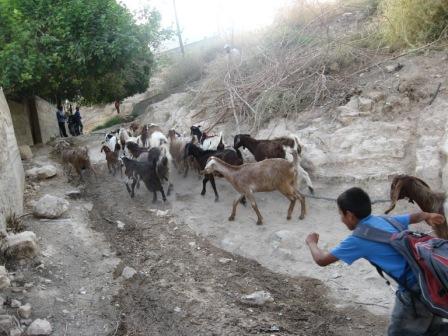
Begin vorige week hebben kolonisten Palestijnse herders met stokken in elkaar geslagen en mishandeld. Het incident kreeg veel media-aandacht omdat een van de slachtoffers een deel van het gebeurde heeft gefilmd, en dit filmmateriaal via de mensenrechtenorganisatie Betselem bij de media terecht kwam. Betselem heeft onlangs 100 camera's verspreid onder de Palestijnen op de Westoever, zodat zij dergelijke zaken, die volgens Betselem geregeld voorkomen, kunnen filmen. Mede met behulp van de beelden heeft de Israëlische politie al enkele verdachten opgepakt. Je kunt je afvragen waarom de politie deze filmbeelden blijkbaar nodig heeft, aangezien men Palestijnse verdachten meestal snel weet te vinden zonder dat iemand ter plekke filmopnamen maakte. De filmbeelden dragen er zeker toe bij dat de politie dergelijke zaken niet meer kan negeren, en dat is goed nieuws, maar het is slecht nieuws dat een dergelijke actie van Betselem daarvoor nodig is. Bovendien valt niet uit te sluiten dat de gedistribueerde camera's ook zullen worden gebruikt om Israël onterecht in de beklaagdenbank te zetten, een nationale sport onder de Palestijnen (zie Palestijnse claims en de media voor een aantal voorbeelden).


Ik was verbaasd over dit incident te lezen bij de BBC, en de filmbeelden vervolgens bij CNN tegen te komen, terwijl er nauwelijks aandacht was in de media voor de explosie van een huis vol bommen in Gaza die bedoeld waren voor een grote aanval op Israël. Ook aan de dagelijkse regen aan raketten en mortiergranaten op Israël besteden de media maar zeer beperkt aandacht.

Het feit dat de media ergens onevenredig veel aandacht besteden en Palestijnse claims vaak kritiekloos overnemen, is uiteraard geen geldig excuus om zulke zaken te ontkennen of te bagatelliseren zoals pro-Israëlische bloggers soms doen. Zelfs een nogal rechtse blogger geeft met enige tegenzin toe dat in dit geval geen sprake is van 'Pallywood', en deze daad niet goed te praten is, maar meent ook dat de camera's tot meer geweld kunnen leiden, omdat de Palestijnen met de camera in de hand geweld zullen uitlokken. Hoe camera's niet alleen worden gebruikt om vast te leggen wat er gebeurt, maar een actief instrument voor propaganda kunnen zijn, en inderdaad ook geweld kunnen uitlokken, heeft Joris Luyendijk treffend beschreven in 'Het zijn net mensen'.

Het enige dat Israël kan - en moet - doen is zelf klachten van Palestijnen altijd serieus nemen en de daders hard aanpakken, en als blijkt dat van provocatie of enscenering sprake is, dit goed en duidelijk communiceren en de verantwoordelijken eveneens hard straffen. Een voorstel van Ami Isseroff is dat Israël een overheidsinstantie instelt met ruime middelen, die klachten uit de Westoever (van Israëli's en Palestijnen) onderzoekt en toeziet op adequate behandeling door politie en kolonistenleiders. De klagers moeten serieus genomen worden en de veroorzakers dan wel ensceneerders stevig aangepakt, van welke partij ze ook zijn.

Op deze manier maakt Israël de haar vaak erg kritisch gezinde mensenrechten- en vredesorganisaties overbodig, voorkomt dergelijke nare incidenten en helpt zo de vijandigheid tussen Joden en Arabieren op de Westoever te verminderen. Israël heeft de plicht ook in de bezette gebieden de wet te handhaven.

Ondertussen moeten we de media erop blijven aanspreken dat de vele mensenrechtenschendingen door de Palestijnen, of het nou (gelukkig meestal verijdelde) aanvallen op Israël of kolonisten betreft, of geweld tegen zogenaamde 'collaborateurs', tegen christenen of andere minderheden en andersdenkenden, niet een fractie van de aandacht krijgen die men aan mensenrechtenschendingen door kolonisten of het Israëlische leger besteedt. Het mag zo zijn dat men aan Israël wat dat betreft hogere eisen stelt, men draagt zo wel bij aan een vertekend beeld van het conflict, waarin bijvoorbeeld kolonisten collectief neergezet worden als extremistische Arabierenhaters die niets liever doen dan Palestijnen in elkaar slaan en hun oogst vernielen. Ik schrik zelf soms van de extreme uitspraken van sommige kolonisten en sympathiseer niet met de ideeën die velen onder hen hebben, maar het beeld dat de media geven doet geen recht aan de grote verscheidenheid en de mensen die wel oog hebben voor de andere kant, en is - om het met een uitgemolken begrip te zeggen - nogal stigmatiserend.

Ratna Pelle


(Meer lezen... | Score: 0)

Nederlandstalige artikelen Staakt-het-vuren tussen Israël en Hamas (IMO)
Geplaatst door abby op Thursday 19 June @ 03:09:28 GMT+1 (42 maal gelezen)

Staakt-het-vuren tussen Israel en Hamas

IMO Blog, 19.06.2008

Morgenvroeg gaat een lang bediscussieerd en besproken staakt-het-vuren in tussen Israël en Hamas in de Gazastrook. Al vóór de 60 jaar Israël vieringen werd hierover onder Egyptische bemiddeling onderhandeld, maar de eisen van beide partijen lagen aanvankelijk ver uit elkaar. Afgesproken is vanaf donderdagmorgen het geweld te staken, na drie dagen zal Israël geleidelijk meer goederen door laten, en in een later stadium zal ook de grens tussen Gaza en Egypte opengaan, en wordt er verder onderhandeld over een gevangenenruil. Hoe Egypte wapensmokkel zal verhinderen is nog een puntje van discussie, net als de vraag of een gevangenenruil nou wel of niet onderdeel is van het staakt-het-vuren. Volgens Hamas is dit niet het geval, volgens Israël wel. Dit laatst is sowieso een vreemde kwestie, want zo'n deal zou juist veel meer in het voordeel van Hamas zijn, daar Israël waarschijnlijk zo'n 1000 Palestijnse gevangenen, waaronder leiders van Hamas en Islamitische Jihad en ervaren terroristen, zal vrijlaten voor één Israëlische soldaat. Mocht het straks van zo'n deal komen, dan zal dit dus vreemd genoeg beschouwd worden als een gebaar van goede wil van Hamas, net als het feit dat men bereid is tot dit staakt-het-vuren.


Hamas heeft veel te winnen bij dit staakt-het-vuren, en zet een belangrijke stap op weg naar internationale erkenning zonder ook maar iets van haar doelstellingen of gewelddadige karakter op te geven. Het kan het staakt-het-vuren op elk gewenst moment verbreken, bijvoorbeeld doordat ongeorganiseerde of nieuwe Palestijnse groeperingen het schenden, en Israël daar vroeg of laat op zal reageren, of door een grote Israëlische aanval op de Westoever te provoceren die als legitiem excuus kan worden gebruikt, of door een explosie te veroorzaken en Israël de schuld te geven. Het vorige staakt-het-vuren is officieel opgezegd nadat Israël zogenaamd een Palestijnse familie op het strand bij Beit Lahiya had gedood, wat later niet waar bleek te zijn, maar wie herinnerde zich toen nog dat Hamas dit als aanleiding had gebruikt? De druk op Israël om zich aan het staakt-het-vuren te houden is groot, zoals Israël ook als sterkste partij de meeste verantwoordelijkheid voor het geweld tussen beide partijen wordt toegedicht. Hamas zal zeker doorgaan met de wapensmokkel, en 'strijders' zullen trainingen volgen in Iran en met geld en ervaring huiswaarts keren, via een versoepelde Rafah grensovergang. Egypte zal symbolisch af en toe een smokkeltunnel onklaar maken of wat explosieven in de Sinaï onderscheppen, maar Hamas en Iran verder niet al teveel in de weg leggen. Hamas zal verder gaan met de opbouw van haar gewapende tak, bunkers en tunnels graven en nieuwe mensen rekruteren. Bovendien versterkt deze deal Hamas' positie ten opzichte van Fatah. Hamas is het gelukt een met Israël gelijkwaardige deal te sluiten, een einde te maken aan operaties van het leger en de grenzen open te krijgen. Hamas heeft maar beperkt toegegeven aan Israëlische eisen, en Israël zal geen enkele controle meer hebben over de Rafah grensovergang, die door Hamas en Egypte zal worden bemand met een beperkte rol voor Europese waarnemers. Dat zij zullen optreden tegen wapensmokkel lijkt onwaarschijnlijk, als je bedenkt dat zelfs UNIFIL in zuid-Libanon niet optreedt tegen de veelvuldige wapensmokkel via de grens met Syrië. Het is dan ook niet vreemd dat Hamas de deal een overwinning heeft genoemd, en triomfantelijk verklaarde dat Israël de voorwaarden van Hamas heeft geaccepteerd

Waarom heeft Israël met een dergelijk plan ingestemd, en niet veel hardere voorwaarden gesteld? De belangrijkste reden is wellicht dat er geen aantrekkelijk alternatief is. De huidige situatie kan niet eindeloos voortduren. De inwoners van Sderot en omgeving, maar ook van de stad Ashkelon met meer dan 100.000 inwoners, eisen een einde aan de raketbeschietingen zodat zij weer iets dat op een normaal leven lijkt kunnen hebben, en de internationale gemeenschap eist een einde aan de Gaza blokkade zodat de Palestijnen aldaar iets dat ergens in de verte aan een normaal leven doet denken kunnen leiden, althans dat hoopt men. Dat de oorzaak van hun problemen niet zozeer Israël maar Hamas is, en dit staakt-het-vuren Hamas slechts zal versterken, dringt niet echt door. Het enige alternatief is een grote operatie in Gaza, waarbij Hamas zo hard wordt getroffen dat zij met overgave instemt, en vervolgens de Palestijnse Autoriteit van president Abbas er de macht weer zou krijgen, evt. met een tijdelijke internationale troepenmacht om de orde te handhaven. Een dergelijke operatie zou duizenden levens kunnen kosten, zeker als Hamas de burgerbevolking als menselijk schild gebruikt zoals zij in het verleden herhaaldelijk heeft gedaan. Zo werden vrouwen en kinderen opgeroepen om huizen en andere gebouwen waar 'strijders' zich schuilhielden te omsingelen, kinderen werden op de daken van Qassam werkplaatsen gezet en men schiet raketten steevast vanuit stedelijk gebied af. Toen bij een operatie in Gaza een paar maanden geleden meer dan 100 doden aan Palestijnse kant waren gevallen, maakte de internationale gemeenschap er snel een einde aan. Bovendien zit president Abbas er niet echt op te wachten om na een dergelijke bloedige operatie onder Israëlisch toezicht de Gazastrook te betreden. Het zal hem er niet populairder op maken, en hij zal erg goede lijfwachten nodig hebben. En welke landen willen hun soldaten lenen voor de ondankbare taak de orde te handhaven en aanvallen op Israël te voorkomen?

De kans dat Hamas zich door het staakt-het-vuren zal matigen, en dat een mogelijke nieuwe eenheidsregering bereid zal zijn Israël te erkennen en het geweld af te zweren, is klein. Een sterker Hamas zal zeker niet de noodzaak voelen om in te binden. Stelt Abbas zich al onverzoenlijk op wat betreft de vluchtelingen, Oost Jeruzalem inclusief de gehele oude stad en andere zaken, Hamas zal nog meer op haar strepen staan. De kans dat dit staakt-het-vuren ergens toe zal leiden is dan ook minimaal, en het zal slechts standhouden zolang dat Hamas van pas komt.

Ratna Pelle


(Meer lezen... | Score: 0)

Nederlandstalige artikelen Palestijnse claims en de media (IMO)
Geplaatst door abby op Thursday 19 June @ 03:03:29 GMT+1 (35 maal gelezen)

Palestijnse claims en de media

IMO Blog, 18.06.2008

De media lijken er een handje naar te hebben om Palestijnse beschuldigingen over Israëlische wandaden kritiekloos over te nemen en vaak prominent te publiceren, maar wanneer die claims onjuist blijken, hoor je daar meestal niets over...

Een paar weken geleden oordeelde een Franse rechtbank in hoger beroep dat er gegronde aanwijzingen zijn dat de filmbeelden van de dood van het Palestijnse jongetje Mohammed Al Dura gefaked waren. Deze beelden leidden zes jaar geleden tot een storm van verontwaardiging en kritiek op Israël, en motiveerden jihadisten in Israël en zelfs in Irak. Terwijl de beelden op alle TV journaals te zien waren en alle kranten er toendertijd over berichtten, werd de uitspraak van de Franse rechtbank nu genegeerd, en alleen kleinere, voornamelijk Joodse media besteedden er aandacht aan.


Zo ging het ook wat betreft de Israëlische herbezetting van Jenin in 2002 en de claims van een massaslachting. De claims kwamen uitgebreid in de media, maar niet het onderzoek door de VN en Human Rights Watch waaruit bleek dat maar 52 Palestijnen, merendeels strijders, waren omgekomen.

Twee jaar geleden werd een Palestijnse familie in Beit Lahiya in de Gazastrook getroffen bij een explosie terwijl zij van een namiddag op het strand genoten. Israël werd beschuldigd, het zou granaten hebben afgevuurd in de richting van het strand. Hoewel Israël zich aanvankelijk verontschuldigde zei men ook dat onduidelijk was waardoor de familieleden precies waren omgekomen. Uit een eigen onderzoek bleek later dat zij niet door Israëlisch vuur waren omgekomen, maar waarschijnlijk door explosieven of mijnen die de Hamas had neergelegd tegen het IDF (Zo bleek bij behandeling van de slachtoffers in een Israëlisch ziekenhuis dat de metaalresten in de lichamen van de slachtoffers niet afkomstig waren van munitie die door Israël werd gebruikt). Uiteraard hadden de media voor dit onderzoek geen belangstelling, en nog steeds schrijven velen deze tragedie aan Israël toe. Overigens was dit voor Hamas de officiële reden waarom men een al vaak geschonden staakt-het-vuren nu 'echt' beëindigde. Een half jaar daarvoor waren ruim 20 mensen bij een explosie omgekomen in Jabalya vluchtelingenkamp, en weer schreef Hamas dit aan Israël toe terwijl men later toe moest geven dat men deze zelf had veroorzaakt.

En vorige week kwamen 7 mensen, waaronder een baby, om tijdens een explosie in Beit Lahyia waarvan Hamas - oh verrassing - Israël de schuld gaf, maar later toegaf dat de eigen - voor Israël bestemde - bommen deze hadden veroorzaakt. De internationale media meldden aanvankelijk beide claims, en sommigen meldden later Hamas' erkenning zelf verantwoordelijk te zijn. In de Nederlandse media werd er vreemd genoeg nauwelijks aandacht aan besteed, terwijl de dood van een Palestijns meisje door Israël een paar dagen eerder wel prominent in de kranten stond. Waar ook geen aandacht voor was, is het feit dat een dag tevoren Israël had besloten om de staakt-het-vuren besprekingen met Egypte nog een kans te geven en vooralsnog af te zien van een grote militaire operatie in de Gazastrook. De omgekomen Hamas activisten waren volgens een verklaring van Hamas bezig met de laatste voorbereidingen voor een 'high quality attack' toen de explosie plaatsvond. Na de explosie heeft men, zogenaamd uit wraak, meer dan 50 mortiergranaten op Israël afgevuurd.

Waarom wilde men zo'n aanval uitvoeren juist nadat Israël een staakt-het-vuren nog een kans wilde geven? Wilde men alsnog een Israëlische militaire reactie oproepen, en zo een staakt-het-vuren verhinderen? Of wilde men voor het staakt-het-vuren zou ingaan nog even laten zien niet bang te zijn, en vanuit een positie van kracht te handelen? Net als de honderden doden sinds de coup van Hamas in Gaza, de veelvoud aan gewonden, de bijna dagelijkse arrestaties van Fatah leden en andere 'dissidenten', de aanvallen op christelijke instellingen en de antisemitische propaganda in bijvoorbeeld het TV programma Pioniers van Morgen, is dit voor de media blijkbaar niet interessant. Nieuws is wat afwijkt van het alledaagse, dus wellicht vindt men deze dingen zo normaal dat ze niet de moeite waard zijn te vermelden, maar waarschijnlijker is dat ze niet passen in het beeld dat de meeste journalisten hebben van het conflict, dat ze moeilijk te filmen zijn of dat het moeilijk of gevaarlijk is er een reportage over te maken. Gevolg is in ieder geval dat het extreem gewelddadige en extremistische karakter van Hamas grotendeels buiten beeld blijft.

Ratna Pelle

Zie ook op Zionation: Hamas Palestinians manufacture atrocity and 'retaliation'


(Meer lezen... | Score: 0)

Lebanon & Israel The Iranian Roots of Hizbullah (MEMRI)
Geplaatst door abby op Thursday 19 June @ 02:50:58 GMT+1 (43 maal gelezen)

The Iranian Roots of Hizbullah

By: Dr. Nimrod Raphaeli*